
Related Posts
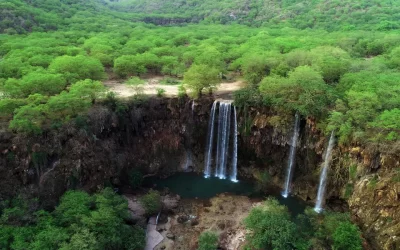
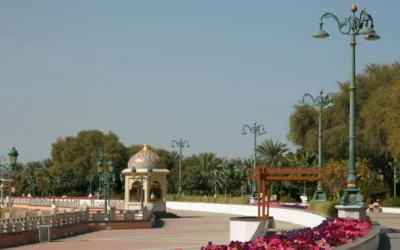
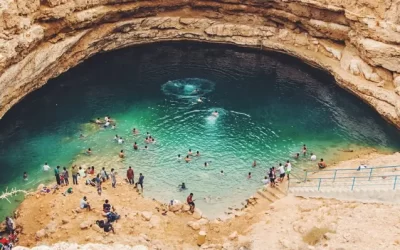
The Sultanate of Oman is a country of ancient culture, Arabian heritage, and maritime history. The threads of Islamic culture, coastal settlements, and ancient Arab society weave together Oman culture traditions.
The cultural heritage of Oman relies on three main pillars: its tribal society, the traditional Ibāḍī imamate form of government, and its maritime tradition.
In the era of modernisation and skyscrapers, Oman still holds onto its traditions, cultural values and heritage.
This article is a bird’s-eye view of the Omani culture and traditions.
Cultural Heritage Of Oman
Cultural heritage can be defined as the physical structures, costumes, traditions, language and beliefs of a nation that they inherited from their past generations and keep alive for future generations.
The cultural heritage of Oman is steeped in Islamic traditions and maritime customs. The earliest human settlements date back to the 1st century. Unlike many other Arab countries, Oman has ancient fortifications, ruins, and other artefacts.
Oman has also preserved its tribal and Bedouin culture, which is fascinating to foreigners.
Traditional Music
Oman’s traditional music differs from other Arabic music because of its maritime culture. The Omanis sailed to and from various parts of the world and exchanged goods and music. The neighbouring Arab music also influences Oman’s traditional music. The Portuguese invasion also left marks on Oman’s traditional music.
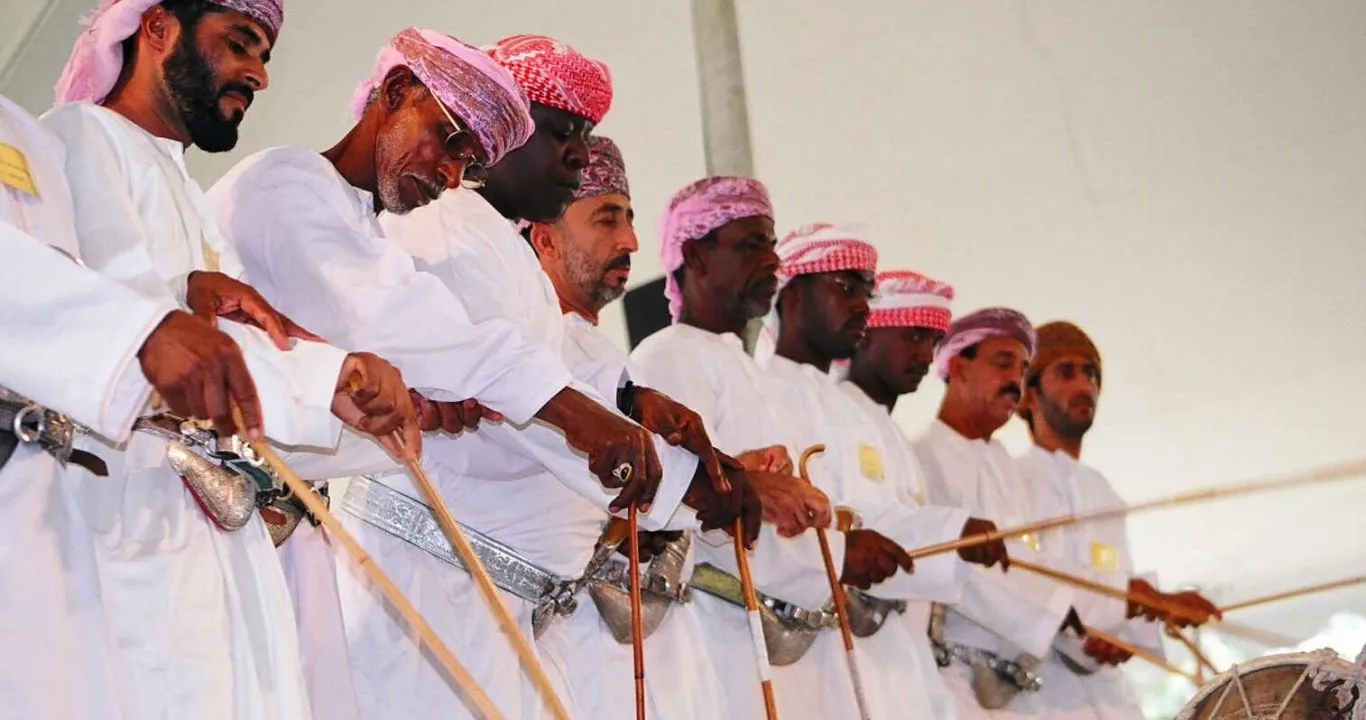
Unlike many other Arab countries, everyone participates in Omani music irrespective of age and sex.
Omani Cultural Dress
Omani Cultural Dress for Men
Dishdasha
The Omani cultural dress for men is called Dishdasha or Kandura. It is an ankle-length, collarless gown with a fragrant tassel along the neck called Tarbousha or Forkaha.
Omani Turban
Men cover their heads with an Omani turban called Mussar and a cap called Kummah.
Mussar protects the head from the heat in the summer. Kummah is made from wool and has delicate embroidery. The use of beautiful colours and beautiful embroidery makes each Kummhah unique.
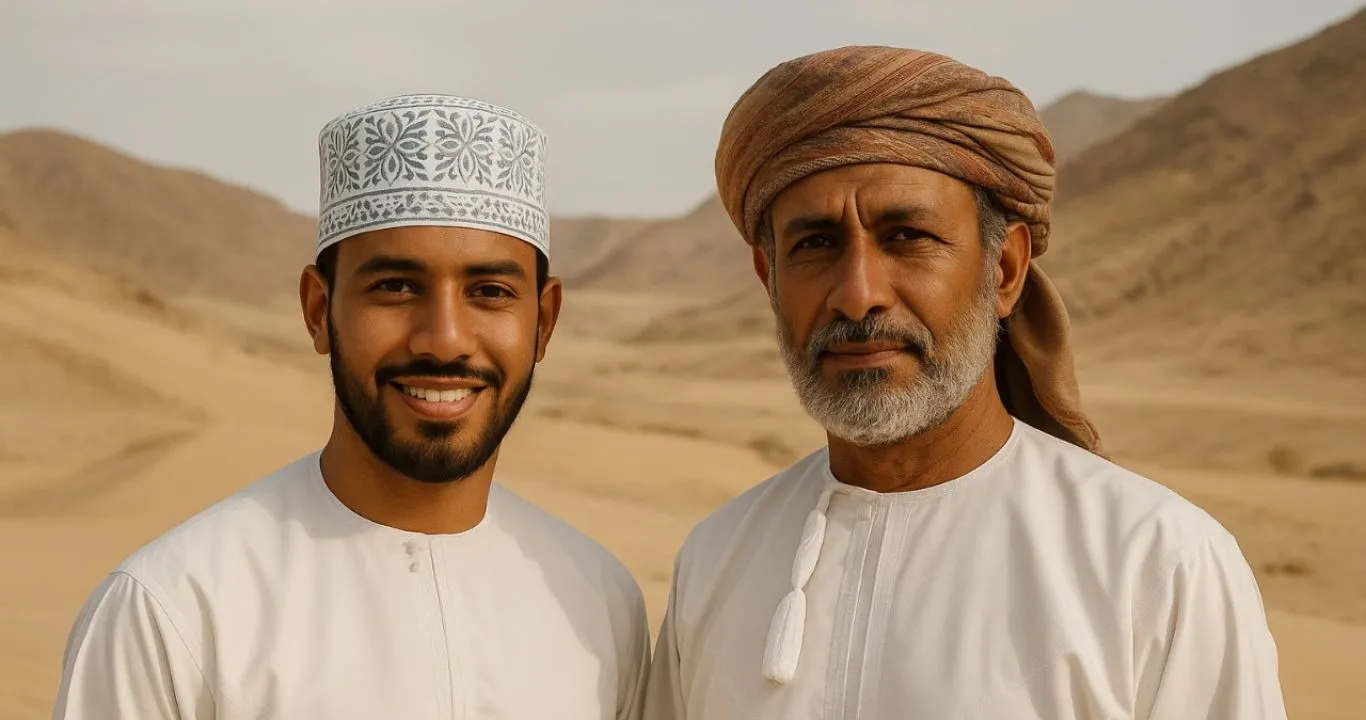
The Omani turban and cap are symbols of cultural integrity that Oman is holding and preserving with pride.
Bisht
On special occasions and ceremonies, Omani men wear a cloak with intricate gold borders on a dishdasha. Bisht is made from luxury fabric and is traditionally black, brown, or white.
Khanjar
Khanjar is the most prominent part of Oman’s cultural dress, symbolising Omani valour and reliance. It is worn on special occasions like weddings, Islamic holidays, and ceremonies. There are many types of Khanjars. Some of them are,
- Al Saidi, worn by the members of the royal family.
- Al Nizwami, worn by the people of Nizwa.
- Al Suri, worn by the inhabitants of Sur.
Omani Cultural Dress for Women
The traditional dress for women is a symbol of Oman country culture. The clothing for women is a combination of colourful fabric and vibrant embroidery. The cuts, colours, and embroidery differ according to various regions of Oman.
The attire includes a dress worn over traditional embroidered trousers called Sirwal. Due to society’s Islamic values, traditional Omani clothing for women is incomplete without a headdress, the Lihaf.
Culture trip Oman
Cultural trip, Oman is explicitly designed for travellers who want to experience Oman’s vibrant culture. Oman tops the list of cultural travel destinations for history enthusiasts as it takes you to the roots of the Middle East and lost Arabia.
The Bedouin tribes, ancient fortifications, centuries-old ruins, and archaic necropolises are great memorials of the Sultanate of Oman’s cultural history.
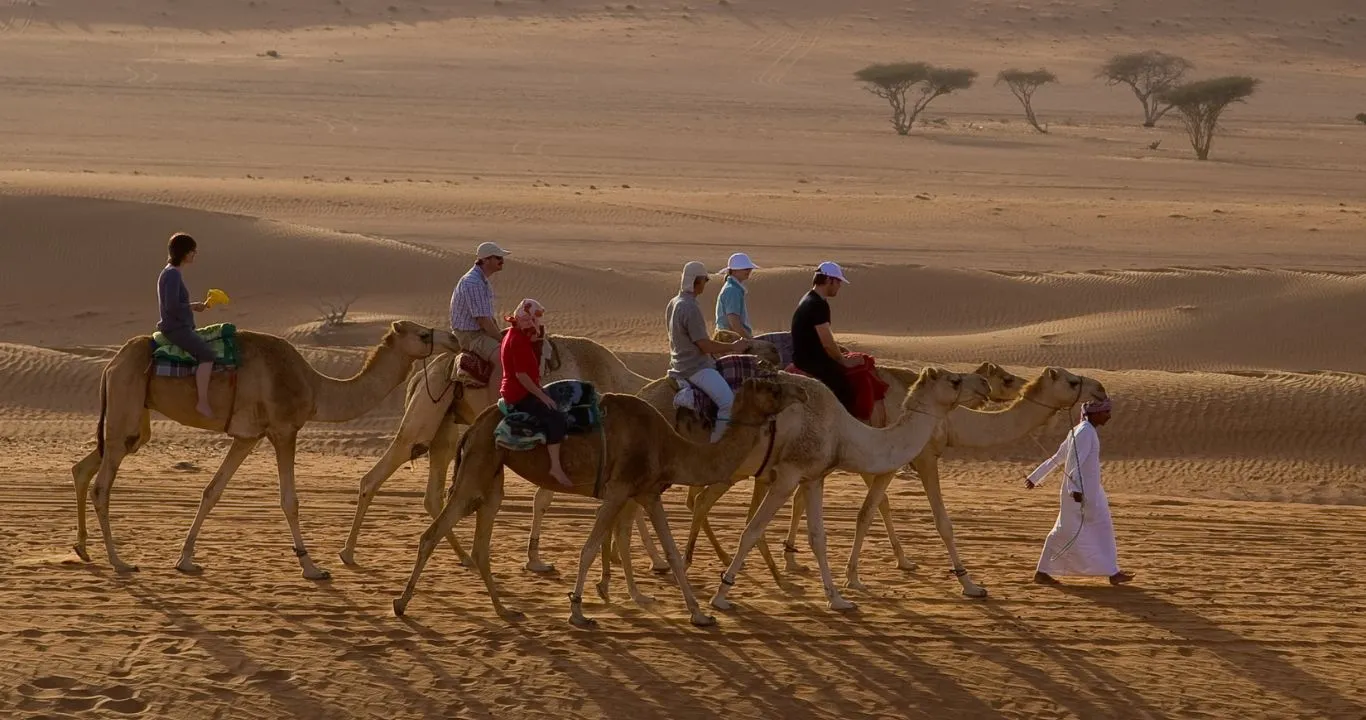
A cultural trip to Oman can be tailored to travellers’ preferences and ease. Tourists can experience the Oman country culture by meeting the Bedouin tribes, the fishing people of Sur, and the mountain village tribes.
You might be interested in:
Oman Tours Packages
Staying in local guesthouses and meeting locals gives a first-hand experience of Oman’s culture and traditions. The beauty of ancient souqs, such as the Muttrah and Nizwa Souqs, also enchants travellers.
The Ministry of Heritage and Culture, Oman, is working tirelessly to promote cultural tourism. It has restored many forts, castles and souqs. Oman is working to balance the modernisation of cities and ancient cultural heritage.
Languages
The official language of the Sultanate of Oman is Arabic.
The following are the languages spoken in Oman:
- The majority of the Omani population, i.e 45.9% speaks Omani Arabic, 16.8% speak Gulf Arabic, and 2.6% speak Dhofari Arabic.
- A significant Omani community of Omani Baloch speak South Balochi.
- The immigrant population speaks Malayalam, Balochi, Bengali, Urdu, and more.
- English is widely spoken in Oman, especially among the immigrant population.
Religion
Oman is a Muslim country. About 75% of the muslim population follows a special sect known as Ibadism. Oman is the only country in the world where Ibadism predominates.
Oman is a very tolerant muslim country, around 13% of the population practices Hinduism. The non-Muslim and muslim communities live in harmony with each other.
Ramadan
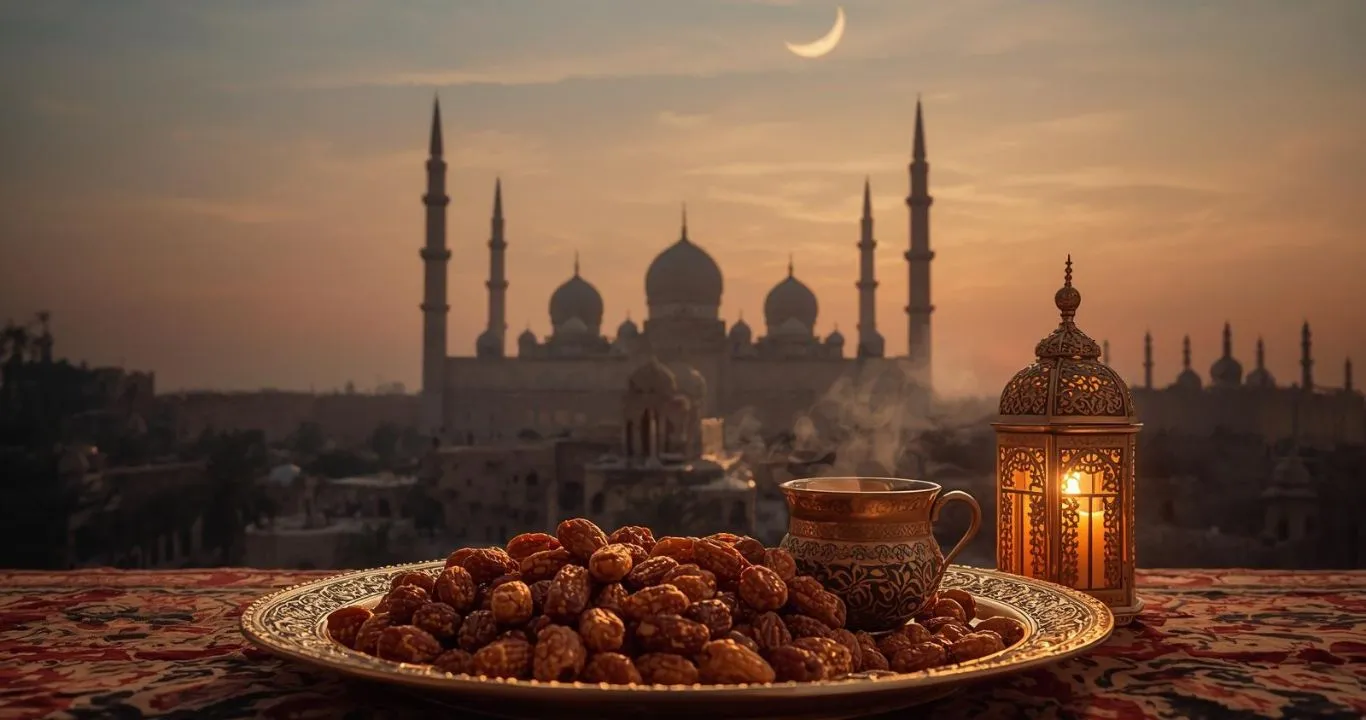
During Ramadan, Islam’s holy month, Muslims fast from dawn to dusk.
Omani Culture and Traditions
Islamic customs and tribal traditions influence Omani culture and traditions. Here, I will discuss many aspects of the culture of Oman.
Hospitality
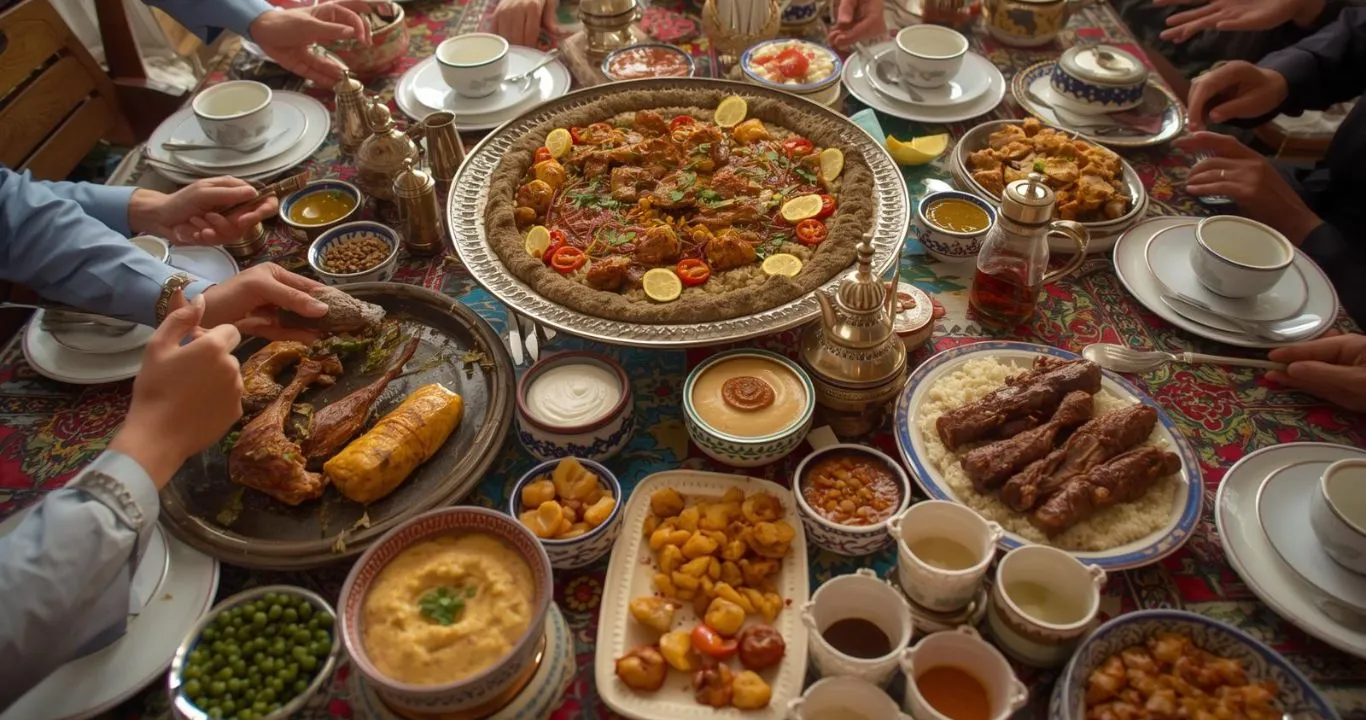
Hospitality is an essential aspect of Omani culture and traditions. Omani people are generous, give their guests utmost respect, and warmly welcome them. Gusts are served with dates and Qahwa (Omani coffee). The feasts offered to guests are hearty and comprise marinated meat and rice.
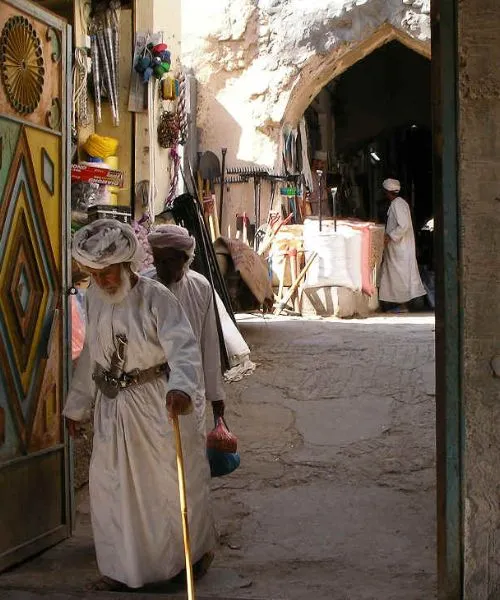
By Brian Dell - Own work, Public Domain, Link
Handicrafts
Omani artists and artisans are skilled. The traditional crafts are centuries old. These handicrafts include:
- Silver jewelry
- Gold jewelry
- Pottery
- Weaving
- Woodwork
- Daggers
- Swords
- Perfume
- Frankincense
Frankincense
Omani frankincense is many centuries old. The trade of this luxury item is an essential part of the culture of Oman. The Ministry of Heritage and Culture of Oman has restored the ancient trail of frankincense, which was declared a UNESCO World Heritage site.
Music and Dance
Music and dance are essential to Muscat, Oman’s culture. East African and Arab traditions influence traditional music and dance.
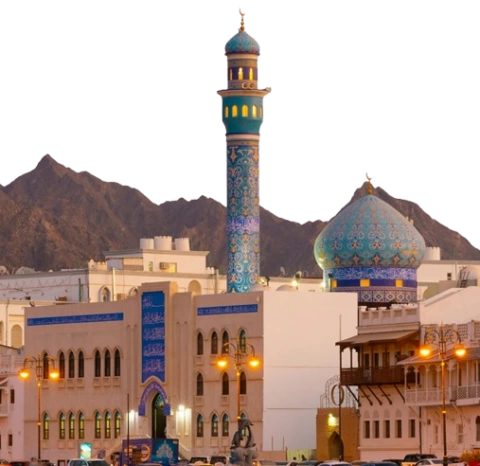
Muscat City Tour Packages
Our city tour Muscat Oman is a mix of culture, history and architecture, perfect for those who want to experience the real deal.
The following are the popular traditional music and dance forms.
Al Ayyala
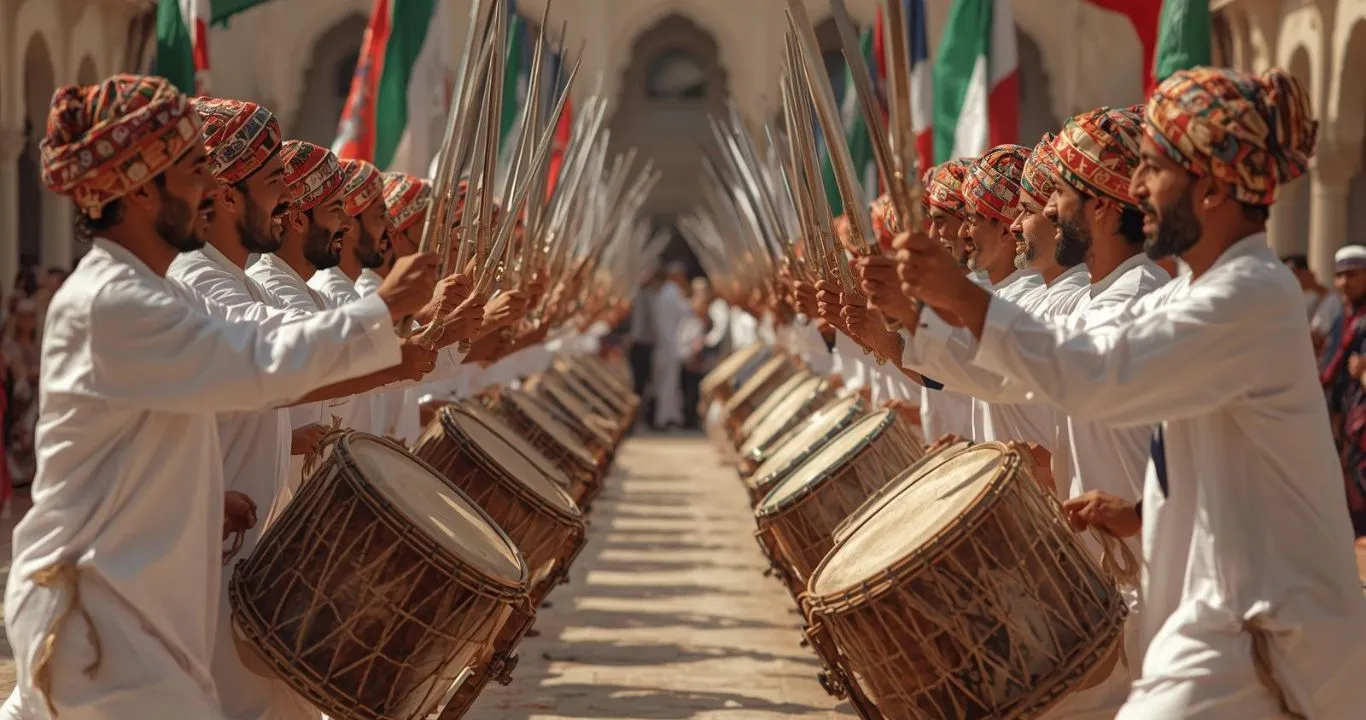
Al Ayyala is a dance in Omani culture and traditions that symbolises the nation’s unity, bravery, and sovereignty.
Al Ayyala is performed as a symbolic battle scene with men dancing in two rows with swords, chanting poetry resonating with the bravery of the Omani people. It also includes drumming.
Al Razha
Al Razha is also a vital dance form of Muscat, Oman’s culture. It is performed at special occasions and festivals.
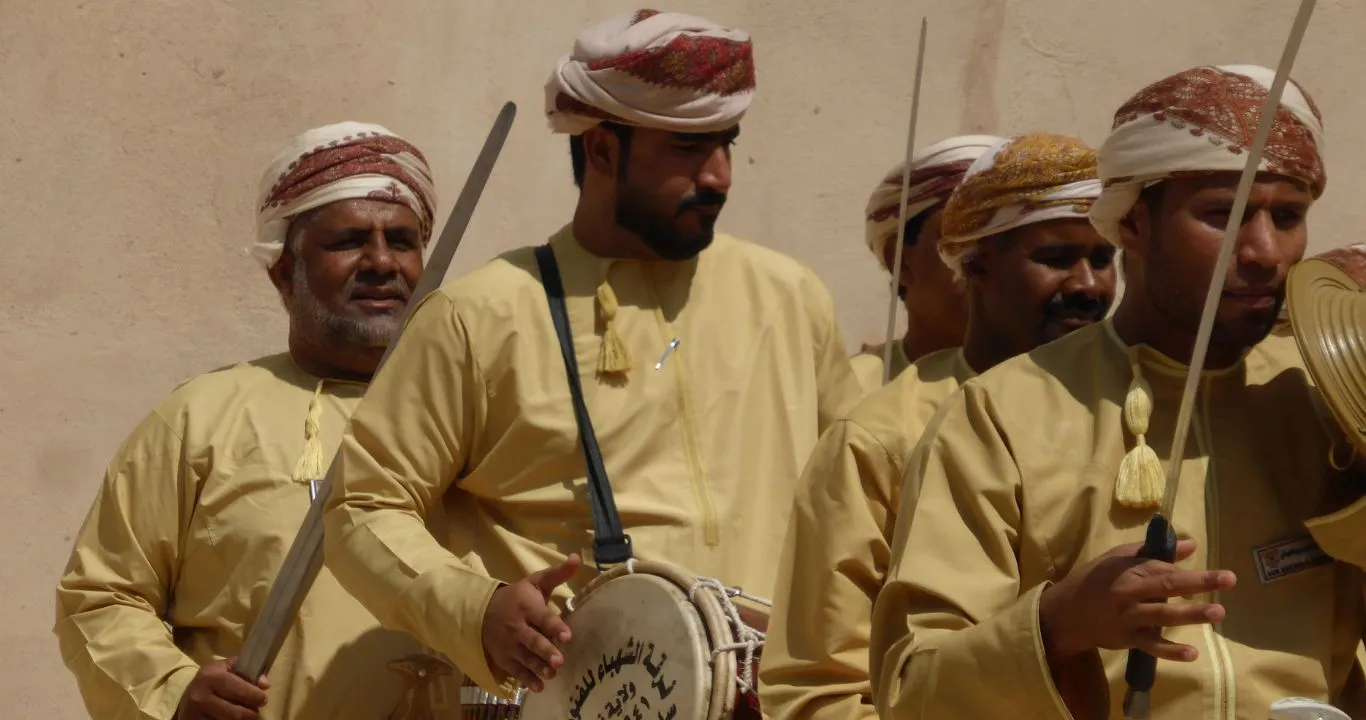
It includes choreographed dance moves, enchanting songs, and drumming. The song usually symbolises the country’s sovereignty and Oman’s culture.
Shopping
Shopping and souqs are an integral part of Muscat, Oman’s culture. Shopping in Oman can be a thrilling experience as it blends traditional souqs with modern malls.
Tourists can shop for gold and silver jewellery, spices, and frankincense in souqs like Muttrah and Nizwa. They can also shop in malls from local and international brands.
Sports and Recreation
Football
Football is the most popular sport in Oman. The young Omani generation loves to play football. The Omani government provides all the football facilities, and Oman has also hosted many football events.

Other Recreation Activities
Many other sports are part of the recreational culture of Oman, such as:
- Dhow racing
- Camel racing
- Horse race
- Falconry
- Dune Bashing
Oman Cultural Complex
The Oman Cultural Complex is a new government project. His Majesty Sultan Haitham Bin Tarik recently laid the foundation for it.
The project covers an area of 400,000 sqm. The complex, opposite Muscat International Airport, will comprise eight buildings, including the national theatre, library, and archives.
The Oman cultural complex is built to showcase the history, culture, and arts of Omani heritage. It will also host exhibitions and cultural shows to promote Oman’s cultural heritage.
Oman Food Culture
Omani food culture amalgamates Arab, Persian, Indian, and East African culinary traditions. The dishes traditionally consist of marinated meat, aromatic rice and other staples. The famous dishes of Oman include:
Shuwa: marinated meat slow-cooked underground, which is often prepared on special occasions.
Majbos Kabsa: a rice dish with meat, chicken or seafood.
Harees: a porridge dish which is a staple in Omani households.
Meshkak: meat skewers
Halwa: traditionally Omani sweets
Kahwa: Omani coffee
Oman Culture Facts
Here are some interesting Oman Culture Facts:
- Sultan Qaboos bin Sultan is the longest-serving Arab Sultan.
- Ancient Souqs that are stretched over miles.
- The crime rate in Oman is almost negligible.
- The Omani breed of horses is among the best.
- For defence, Oman has a series of forts and castles built nationwide, especially along the coastline.
- Oman possesses many UNESCO World Heritage sites.
- Omani coffee ‘ Qahwa’ is addictive and is served to every guest who graces an Omani household.
- Omani homes have a separate drawing room called Baithak for guests to be seated, entertained, and served.
- Alcohol is not allowed in Oman. It is only available to foreigners at designated permit-holding spots.
Conclusion
Oman has a vibrant culture and heritage. The Omani nation still holds onto its traditions, which makes this country very interesting.
If you are a history enthusiast and want to see the charm of ancient Arabia, then you must visit Oman. It is a country that perfectly blends ancient culture with modern infrastructure. The roads, buildings, facilities, malls and airports are up-to-date, while the ancient souqs, forts, castles, and necropolises are well cared for.
The Ministry of Heritage and Culture of Oman is making significant efforts to preserve Oman’s culture and heritage for tourists.
Oman’s culture is gracious, humble, and hospitable. The Omani people are tolerant and peaceful, making Oman one of the safest countries on the planet.
Frequently Asked Question
Q: No: 01 What is an Interesting fact about Oman?
Ans: Oman has many interesting facts, most notable of which is that it is the oldest independent Arab state, and Sultan Qaboos was the longest-serving Arab ruler.
Q: No: 02 What is the lifestyle in Oman?
Ans: Oman’s lifestyle is steeped in Islamic cultures and tribal traditions. The Omani people’s lifestyle is satisfying yet straightforward and peaceful. The government provides many facilities to its nationals, like free medical care and education.
Q: No: 03 Why is Oman Special?
Ans: Oman holds a special place in the Middle East because of its ability to hold onto its past. Oman has successfully blended modernisation with its ancient culture. The country is safe and peaceful. You will find all the amenities in Oman. It takes you to the lost charm of Arabia. The country is a heaven for people who love the arts, culture, traditions, and history.